Call our team for a personal consultation regarding your businesses fire and security needs on 01733 246 990

Types of Access Control Systems

Is your company safe and secure? You may have locks on the doors, but what about digital security? You live in a technologically advanced world. Ensure that your business is up to speed with Access Control Systems so you know who has access to your information.

What are Access Control Systems?

Access Control Systems , at their very basic concept level, control who can gain entry or access to specifically assigned or designated areas. These systems also control whether individuals gain access via keys, key fobs, digital keypads, or even biometric configurations. Specific security measures ensure that only people allowed to be within your facility or digital enterprise have access. Within that general construct, there are two types of access control systems. 

Doors

The first is Standalone Access Control Systems for doors. This system is similar to what homeowners use. With these, there may be one code for all individuals that are granted access to enter the location. There can also be different codes assigned to each individual so that entrants may be tracked and monitored. This type of system is more suited to a smaller building and business.

Networked

The second type of Access Control System is Networked Access Control. This system is suited to larger facilities and businesses as access can be configured and reconfigured with greater agility based on changing needs and employee status. Additionally, it can be integrated with other security and safety resources such as fire suppression systems , lifts and lighting, and intruder alarms .

Access Control Systems can be further broken down into three specific categories.

1) Discretionary Access Control

Discretionary Access Control (DAC) relies upon the business leader or owner to select which personnel receive specific types of access to the physical building and/or to the digital or network content. DAC is less prohibitive than the other two options. However, it also allows users greater access to all programs and related channels and can potentially introduce volatile and dangerous programs under the radar of observation.

2) Mandatory Access Control

Mandatory Access Control (MAC) is a middle-ground option. It is used more often in organisations such as the military or high-tech companies that demand complete compartmentalisation of information and have classification designations. Limitations or access can be placed upon both physical spaces within a building in addition to areas within the business’ digital platforms. Only the leaders or administrators can assign specific access controls. This is usually done based on clearance level.

3) Role-Based Access Control

Role-Based Access Control (RBAC) is the most utilised Access Control System in both businesses and homes. There is ease of use involved in RBAC as specific security levels may be designated for certain professional titles versus being assigned directly to an individual. This keeps the levels delineated for oversight, especially when employees switch roles.

Seek out the experts in Access Control Systems. You are the expert in your business, they are experts in Access Control. Britannia Fire & Security will guide your business to the next level of protection and security. Get a free quote today.

Which Extinguisher Should You Not Use to Put out a Flammable Liquids Fire?

When a fire breaks out, understanding how to safely use a fire extinguisher can save lives. Different fires require different extinguishers, and using the wrong one in the wrong environment can be ineffective or even dangerous. This is particularly true for fires involving flammable liquids, known as Class B fires, which include substances like oils, petrol and paints. This article will discuss which extinguisher you should not use to put out a flammable liquids fire, as well as the different types of fire extinguishers available.

Fire Classes

Fires are classified into several categories based on the fuel that’s burning. Class A fires involve ordinary combustibles such as wood, cloth, and paper. Class B fires are those that involve flammable liquids such as petrol, oil, and solvents. Class C fires are electrical fires, which involve energised electrical equipment.

Other classes include Class D, for combustible metals, and Class K, for cooking oils and fats in kitchens. Class B fires are particularly hazardous because the liquids involved can spread rapidly and are often highly volatile.

Types of Fire Extinguishers

There are several types of fire extinguishers available that are designed to combat different classes of fires. Their unique properties allow for fast and potent fire suppression, helping to calm all types of fire. The different fire extinguishers include:

  • Water extinguishers are effective on Class A fires.
  • Foam extinguishers can be used on Class A and B fires.
  • Dry powder extinguishers are versatile and can be used on Class A, B, and C fires.
  • CO2 extinguishers are suitable for Class B and C fires.
  • Wet chemical extinguishers are primarily designed for Class F fires but are suitable for Class A fires, too.

Each extinguisher uses a different substance to smother or chemically halt the fire, and understanding these differences is key to selecting the right one in an emergency.

Which Fire Extinguishers Shouldn’t Be Used on Liquids?

Water extinguishers should not be used on flammable liquid fires (Class B). The reason for this is that water is denser than most flammable liquids and sinks below them. Instead of smothering the fire, the water can cause the burning liquid to spread, increasing the fire’s area and intensity. If the liquid is hot enough, water can turn to steam explosively, propelling the burning liquid even further.

Which Fire Extinguisher Should You Use on Liquid Fires?

For Class B fires, the most effective extinguishers are CO2, dry chemical, and foam. They work in the following ways:

  • CO2 extinguishers work by displacing oxygen around the fire, suffocating it without leaving any residue.
  • Dry chemical extinguishers release a fine powder that interrupts the chemical reaction of the fire.
  • Foam extinguishers cover the fire in a foam blanket, cutting off the oxygen and preventing the vapours from rising and feeding the fire.

These extinguishers are specially formulated to tackle the unique challenges posed by flammable liquids, making them the safest choices for these types of fires.

Using a Fire Extinguisher Safely

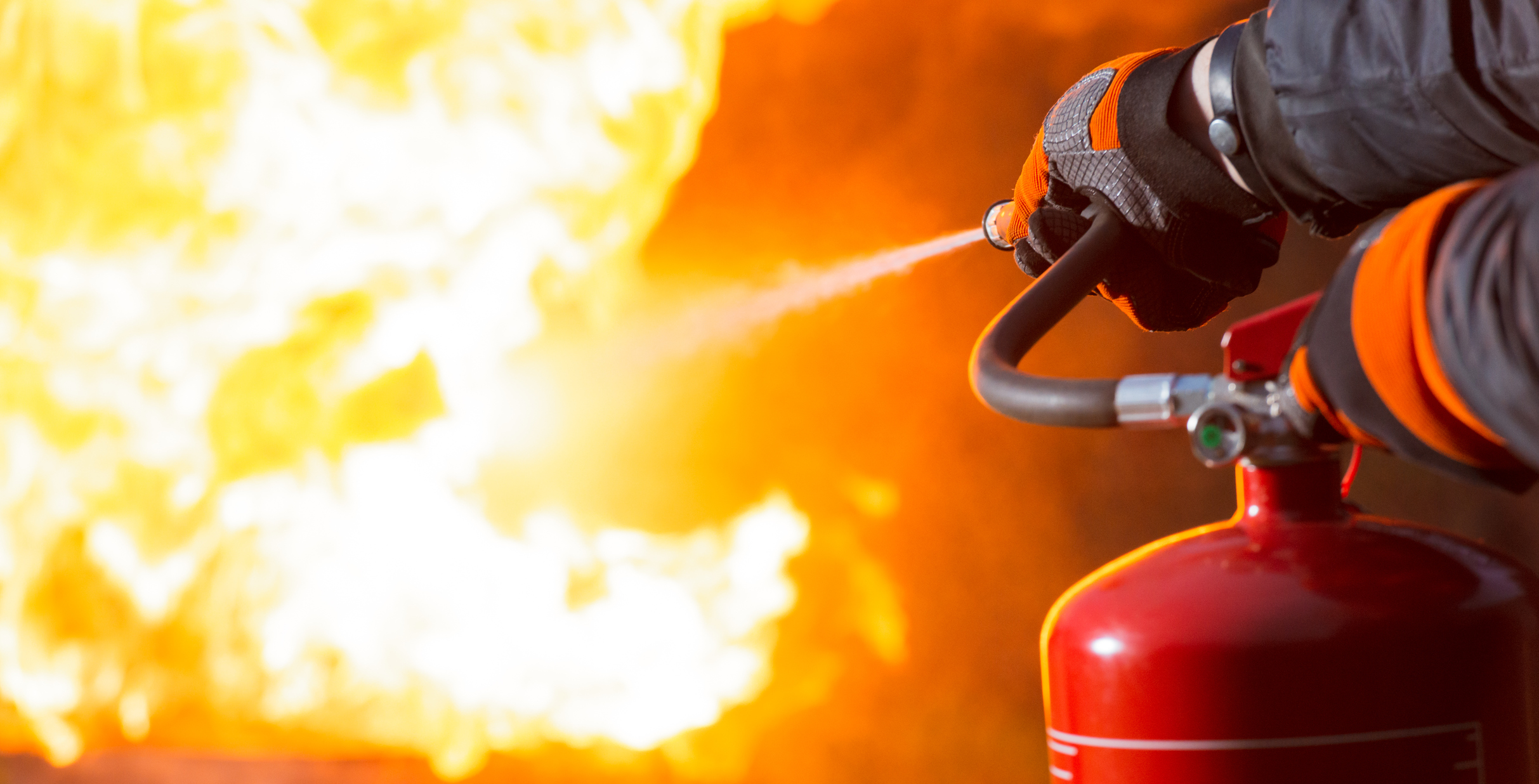
Learning how to safely use a fire extinguisher is incredibly important, as you may be expected to use it in an emergency. The PASS technique – Pull the pin, Aim the nozzle at the base of the fire, Squeeze the handle, and Sweep the nozzle from side to side – should be employed. Safety is paramount when using extinguishers, so never turn your back on a fire – even if it appears to be extinguished – and maintain a safe distance.

What to Do If You Don’t Have the Right Extinguisher

If the correct type of extinguisher is not available, then you don’t have the right tools to combat the fire. In instances such as this, you should focus on moving away from the fire rather than trying to stop it. Evacuate the area immediately and call emergency services, as they will have the right tools for the job. Never use an inappropriate extinguisher, as it can exacerbate the fire and increase the risk of further damage.

Maintenance and Inspection of Fire Extinguishers

Regular maintenance, servicing and inspection of fire extinguishers are essential to ensure they’ll function when needed. Check for signs of damage or corrosion, ensure the pin is intact, and verify that the pressure gauge reads in the operational range. Training and familiarity with the types of extinguishers available in your home or workplace can be lifesaving in an emergency.