Call our team for a personal consultation regarding your businesses fire and security needs on 01733 246 990





Nationwide Coverage


 5-Star Access Control Installers
Access Control System Installation
Keys get copied, codes get shared, and nobody can say who was in the building at 10pm. Britannia installs access control that puts you back in charge of every door: who gets in, where and when, with an audit trail of it. Designed for your building, and integrated with your fire alarm so doors release when it activates.









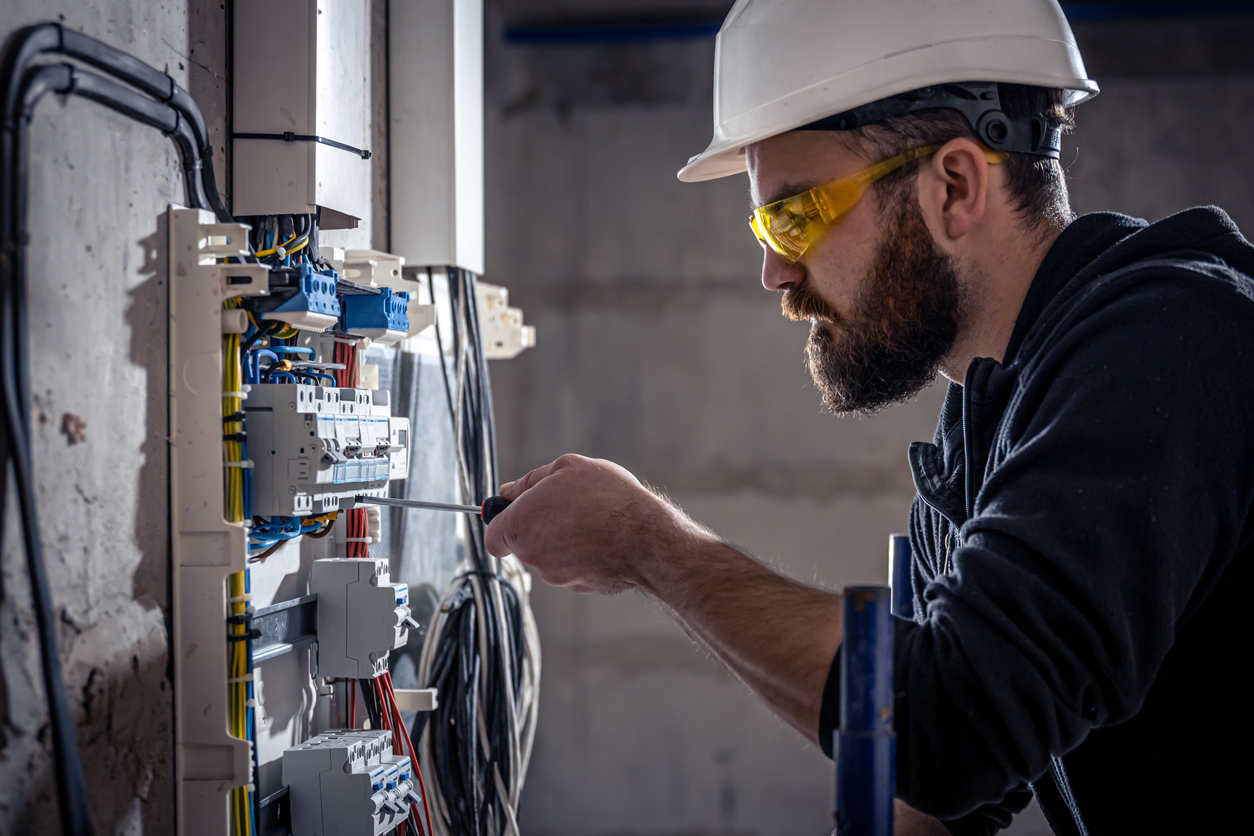
Access control installers who think about the whole building
Access control usually sits with facilities, estates or health and safety, and the brief is never just ‘lock the doors’.
- Control without keys. Lost fobs and leavers’ credentials are revoked instantly.
- A record you can use. Every entry is logged, so audits, investigations and insurer questions get an answer instead of a guess.
- Doors that stay safe in a fire. Fail-safe doors unlock on power loss, and access control releases when the fire alarm activates. Where we’ve fitted your fire alarm, we plan the integration directly against its panel.
- Access that matches how the building works. Staff-only areas, tenant entrances, contractors and visitors: who goes where, and when.
- Systems built around people. At Elizabeth House care home in Enfield, we developed a fob system with long-range readers so disabled residents can get to their living quarters easily.
- Minimal disruption. Installation outside core hours where needed, phased delivery on larger sites, and readers chosen door by door: fobs, cards, PINs or biometrics. Your team is trained to add, remove and audit users without specialist technical knowledge.

Access control regulations: fire doors, accessibility and data
Access control sits across three sets of rules. Get one wrong and the building can be unsafe or non-compliant.
Fire safety. Approved Document B (England) says escape doors should open without a key. Electrically powered locks on escape routes should unlock when the fire alarm activates, on power failure or system error, and when the escape-side override is used, normally a Type A call point to BS 7273-4. BS 7273-4:2015+A2:2023 sets the release interface category by risk. Category A covers the most critical doors, such as locked escape doors in hospitals, residential care and schools. In some care settings, such as dementia care, a risk assessment involving care staff may support Category B or C release instead of Category A.
Accessibility. Approved Document M expects door entry systems to work for deaf and hard-of-hearing people and people who can’t speak, and the Equality Act 2010 requires reasonable adjustments for disabled users.
Data protection. Entry logs are personal data. Fingerprint and face readers process biometric data, which is special category under UK GDPR: you’ll need a DPIA, a valid condition (usually explicit consent) and an alternative, such as a card or PIN, for anyone who declines. In 2024 the ICO ordered Serco Leisure to stop using facial recognition and fingerprint scanning to monitor staff attendance.
Accredited access control installers
- SSAIB certificated security company
- NICEIC approved contractor
- BAFE SP203 registered (300175) for fire alarms, relevant wherever access control meets the fire alarm
- ISO 9001, 14001 and 45001, UKAS-accredited certification
- CHAS and Constructionline
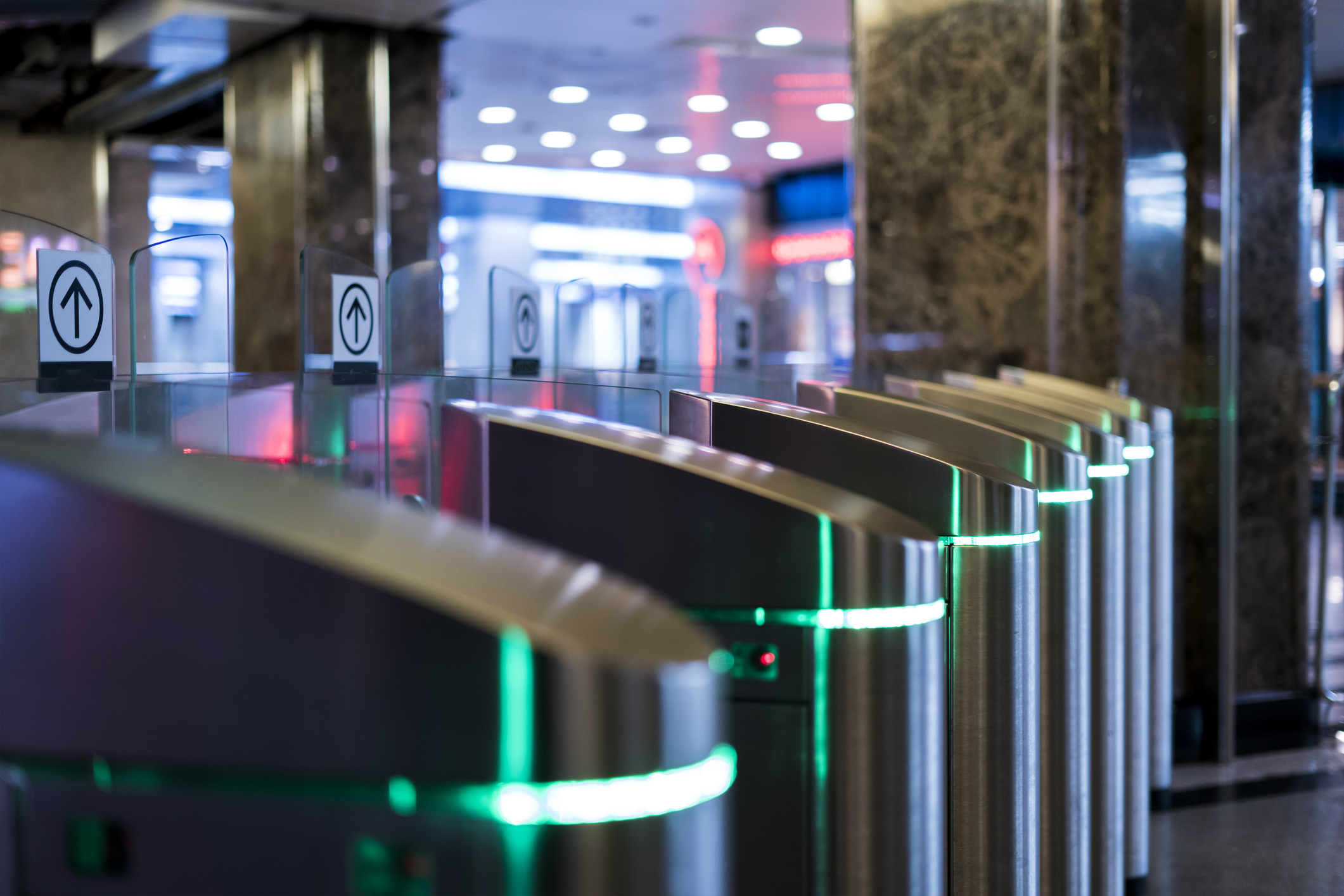
Case study: bespoke access control at Houghton Regis Leisure Centre
Britannia installed the complete suite of fire and security systems at this new-build leisure centre, including 16 access-controlled doors on Paxton Net2, integrated with the Gent fire alarm.
The changing rooms needed a ‘Jack and Jill’ interlock: an occupied light outside, a maglock that holds while the room is in use, a staff keypad override and two emergency buttons inside. We designed it bespoke for the site, and it’s one of the most successful parts of the project.

Free access control survey and quote
We’ll survey the building with you door by door: what each one protects, who needs to get through it, and when. You then get an in-depth proposal and quote, with honest advice.
No obligation. Call 01733 246 990 or email info@britanniaalarms.co.uk.

Our access control installation process
- Site survey. Building layout, entry points and security requirements assessed.
- System design. Keypads, fobs, cards or biometric readers chosen per door, with the fire alarm interface designed to BS 7273-4.
- Installation. Our engineers install and configure the system with minimal disruption, outside core hours where needed and in phases on larger sites.
- Testing and training. Every door tested and the fire alarm interface proven. Your team trained to add, remove and audit users.
- Ongoing support. Service contracts and 24/7 support keep it secure and working.

Access control installation across the UK
From a single door to multi-building systems, we install access control across the UK from our base in Peterborough, with engineers covering Cambridge, Northampton, Leicester, Nottingham, Lincoln and Luton.
- Offices and multi-tenant buildings: tenant entrances, staff-only areas, contractors and visitors
- Industrial and logistics: yards, gatehouses and shift access
- Healthcare: restricted clinical and drug storage areas, and resident access
- Education: site access control around safeguarding duties
- Local authority, retail and leisure buildings
Access control can work alongside your CCTV and intruder alarm.

"Britannia Fire & Security are a very approachable and knowledgeable company, proactive in giving quotations within timescales given, very professional on site and backed up with great office support."

"We really enjoy working with Britannia, we find them to be extremely helpful throughout the process from tendering, design, installation and right through to completion. They have been extremely supportive and most importantly in a professional and timely manner."
"Britannia have a vast and incredibly competent knowledge base, that has helped with many challenging issues with complex systems. Planned installation work has always been completed to a high standard and high level of professionalism, with the added reassurance of supportive after sales care."

"Having utilised Britannia for many years as part of our MEP supply chain, would highly recommend their services. Professional and knowledgeable team members complimented by an experienced and skilful engineering team they have assisted us in delivering some high quality projects."

"Concept-MEP carry out a large number of projects in conjunction with Britannia Fire & Security both in the UK & overseas. This has been a long-standing relationship due to the high quality of service and workmanship that they provide"

"More than happy to assist"

"I have used Britannia Fire & Security over the past 15 years at various company’s I have worked for. They offer a very professional service in all aspects of Fire and Security, and everyone in the business is aways willing to assist. I wouldn’t have an issue in recommending Britannia."




Access control installation FAQs
What is an Access Control System? >
Access Control Systems typically use an identifier, such as an access card, to authorise employees or people to enter certain areas, and because they are able to record who accessed where and when, they can provide valuable data to help you track how your buildings and sites are being used.
- Ionisation Alarm (for invisible smoke particles)
- Optical alarm (for detecting the larger smoke particles and suitable to use throughout buildings)
- Heat alarm (for detecting heat. Heat sensors are therefore ideal for kitchens)
- Combined alarms or multi-sensors (detect both smoke and heat)
- Mains alarms (connected to your buildings electrical supply, meaning you won’t need to change batteries)
- Interconnected alarms (for an additional level of safety by ensuring that if one alarm triggers, every alarm in that building does)
Why use an access control system instead of keys? >
Mechanical keys are still the most popular and simplest form of physical access control. However, access control systems are becoming increasingly popular for business, as there are many drawbacks as to why access control system is better than mechanical keys. A few of the benefits to access control are;
- Employees lose keys
- Keys don’t leave an audit trail of access
- If you have a large building, keys can become difficult to manage
How do I know what type of access control system my building needs? >
The right system depends on the number of access points, the level of control required, the size of the user population, and how the system needs to be managed day to day. A small single-site business with a handful of employees has very different requirements from a multi-site organisation managing contractors and shift workers. The starting point is a site survey that maps the access requirements against the building layout and identifies the system architecture that best fits those requirements. Britannia carries out access control surveys and provides recommendations based on what the building actually needs rather than a standard specification.
How does access control integrate with fire alarm systems? >
Access control doors on escape routes must release automatically when the fire alarm activates, ensuring occupants can evacuate without obstruction. This is achieved by connecting the access control system to the fire alarm panel, so that an alarm signal triggers the release of controlled doors. The specific configuration depends on the door type, its role in the escape route, and whether it also serves a fire compartmentation function. Britannia designs access control installations with fire alarm integration in mind from the outset, and where both systems are installed by Britannia, the integration is planned directly against the existing alarm panel configuration.
What's the difference between fail-safe and fail-secure doors? >
A fail-safe door unlocks when power is removed or when the fire alarm activates. This is the standard configuration for doors on escape routes, ensuring people can always exit in an emergency. A fail-secure door locks when power is removed, which is appropriate for doors where security must be maintained even during a power failure, such as server rooms or secure storage. The correct configuration for any given door depends on its function, its location relative to escape routes, and any fire safety requirements for that part of the building. Incorrectly configured doors are one of the most common access control compliance issues and should be reviewed as part of any new installation or takeover.
Will installation disrupt day-to-day operations? >
Installation work will involve some disruption, particularly at the doors being fitted with new hardware. Britannia plans access control installations to minimise the impact on normal operations, including scheduling work outside core hours where the site requires it. For larger installations, phased delivery can be arranged so that not all access points are affected simultaneously. The extent of disruption depends on the scope of the work and the operational requirements of the site, which are established during the survey and planning stage.
What kind of audit trail does access control provide? >
Modern access control systems log all access events, including successful entries, failed attempts, and any manual overrides. This creates a time-stamped record of who accessed which door and when, which can be used for security investigations, compliance reporting, or operational management. The depth of the audit trail depends on the system specified and how it is configured. For sites where audit trail data is important for compliance or insurance purposes, this should be factored into the system specification from the outset. Britannia can advise on the audit trail capabilities of the systems it installs and how to configure reporting to meet specific requirements.
Do you provide ongoing support after the system is installed? >
Yes. Britannia provides maintenance and support for access control systems following installation, including scheduled preventive maintenance visits and responsive support for faults. Access control systems require periodic maintenance to ensure door hardware, readers, and the central management software remain in working order. Regular maintenance also provides an opportunity to review access permissions and ensure the system still reflects the current requirements of the building. Maintenance agreements can be discussed as part of the installation quotation.
How much does access control installation cost? >
It depends on the number of doors, the credential type and the door hardware already in place. We quote from a free site survey, door by door, so you are not paying for a specification the building does not need.
What standards should access control installation meet? >
Access control should be installed by a third-party accredited installer – we are SSAIB-approved – and any door on an escape route must comply with fire safety requirements so it releases on a fire signal. We prove that interface on handover and record it.
Industry News & Insight
Festive Period Arrangements 2025
Our office will close at Midday on Wednesday 24th December 2025 and will reopen at 9am on Monday 5th January 2026. During the festive shutdown peri...
Planet Mark Business Certification Tier 2
🌍We're pleased to announce that we've now been recording our data for two years.
Festive Period Arrangements 2024
Our office will close at 12:00 on Tuesday the 24th of December 2024 and will reopen at 09:00 on Thursday the 2nd of January 2025. During the festive s...